How to Tell If It Is Rising Damp and What to Do About It
In the homes of many Italians there is an enemy that often goes unnoticed but can silently undermine the solidity of a structure and the health of its occupants: rising damp.
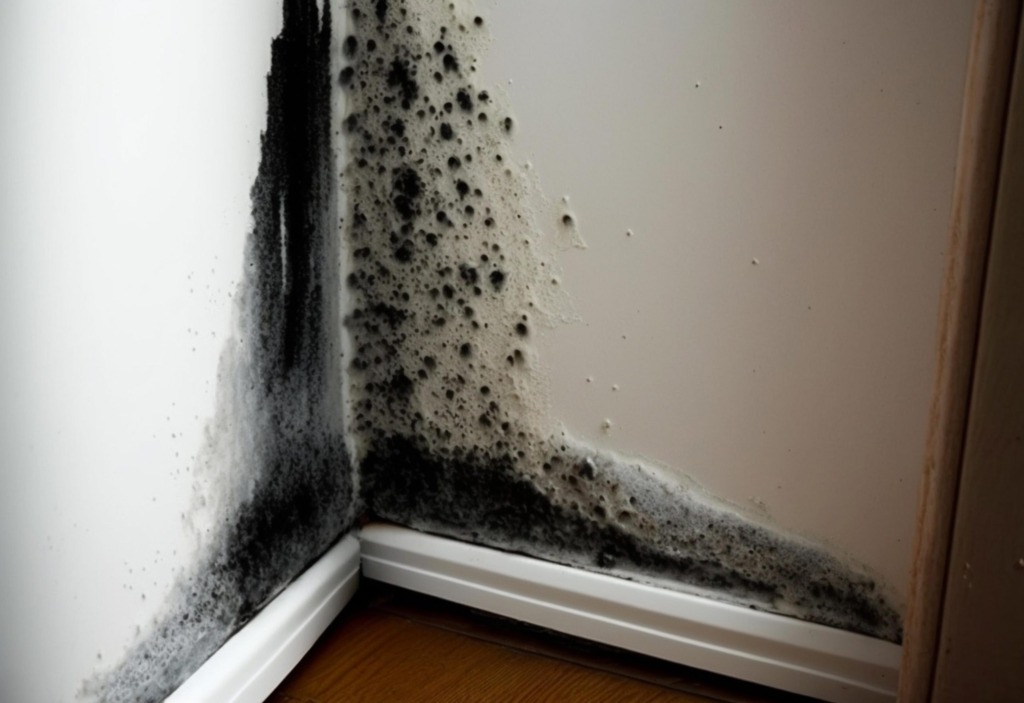
We are used to thinking that damp forms only in the upper corners of walls, on ceilings, or behind large furniture that prevents the walls from airing. However, rising damp also leads to the formation of mould on the lower parts of the walls, just above floors or skirting boards: why? What is rising damp?
What is rising damp?
Rising damp is an insidious phenomenon that silently affects our homes, attacking them from the foundations. It is water rising from the ground through the pores of building materials, such as bricks and concrete, leading to a series of damage and health problems. In fact, if your home, old or new, has rising damp, it shows yellow stains on the lower parts of the walls or, in more serious cases, mould and cracks in both the plaster and deeper parts.
You can tell there is rising damp just by walking into a room: the smell becomes unpleasant, a wet smell, like going down into a cellar. If you have wallpaper, it becomes damp and peels off the walls. But that’s not all: the external walls also suffer the consequences of rising damp. Have you ever noticed white stains just above the ground, as if there had been a flood and it had left marks of the water level on the walls?
There has been no flood or inundation: these are the effects of rising damp, which deposits the salts in the water as far as it can reach inside the walls, creating white, unsightly stains.
On the one hand, then, rising damp causes serious aesthetic and structural damage; on the other, it can aggravate health problems such as asthma and allergies by creating an unhealthy, damp indoor environment. From this brief overview of the phenomenon, you will certainly have understood that preventing rising damp is essential.
Causes of rising damp
To understand how to act to eliminate the problem of rising damp and its consequences completely, it is best to first understand the triggering causes.
In old buildings, the deterioration of the original damp-proof courses can allow water to seep in. In new buildings, problems such as raised ground levels above the damp-proof course, replastering or the accumulation of debris can compromise protection against damp.
These conditions can create a “bridge” that lets moisture rise up the walls, both interior and exterior, causing structural damage and health problems. It is important to recognise the early signs of rising damp and take preventive measures, such as installing adequate thermal insulation, to protect the building and its occupants.
How to prevent rising damp?
Good thermal insulation not only helps prevent moisture from penetrating through the walls, but also improves the thermal comfort properties of the building as a whole, reducing the need for heating and therefore energy costs and environmental impact.
By creating a barrier against cold and external damp, water is prevented from penetrating the masonry and condensing inside. But how is this done in practice? Are there eco-sustainable solutions?
One of the most practical and eco-sustainable strategies against rising damp is the use of low-environmental-impact materials and interventions. This approach aims to use waterproofing products, insulation and plasters that are eco-compatible and recyclable. For example, EPDM waterproofing membranes or bio-based polyurethane resins can be used, which offer high performance without harming the environment.
In addition, to improve the building’s thermal insulation and ventilation sustainably, natural insulating materials such as wood wool, hemp or cork can be used, especially under floors and in walls affected by rising damp.
Of course, these interventions can be expensive and invasive. After all, big problems call for big construction works. For example, waterproofing the foundations can be somewhat costly and require work involving excavation around the building. It is a more invasive process and may take some time, but it can be an effective and long-lasting solution.
In general, it is important to consider the available options carefully, weigh the costs and benefits of each intervention and consult qualified professionals for personalised advice on the best solution for your situation.
Conclusions
At Diasen, we often hear stories of homeowners who notice rising damp inside their homes. The sooner you act, the better. We recommend to experienced builders our best products, effective against mould and damp and respectful of the environment thanks to their green building formulation.
Among them is Diathonite Evolution, a key ally against damp. Born from the skilful union of natural raw materials, including hydraulic lime, plant fibres and pumice, Diathonite Evolution is not just a simple plaster. Its high porosity allows air, the most powerful natural insulator, to circulate freely, creating an effective barrier against winter cold and summer heat.
Its exceptional breathability guarantees walls that are always dry, free of mould and condensation, for a healthy and comfortable environment in every season. Besides living comfort, Diathonite Evolution also brings added value: sustainability. Made from natural materials with low environmental impact, this bio-mortar is a conscious choice for those who wish to live in harmony with nature.
Turn damp into a distant memory: choose Diasen, experts in green building and producers of bio-mortars, plasters, anti-condensation paint and other products that are friends of the environment and of homeowners.