At the heart of the meeting “Forms of Beauty: Wellbeing Materials and Mediterranean Architecture”, organised by Diasen at the Politecnico di Milano

Milan, 25 October 2024 – 145 billion cubic metres have been built on the Earth’s surface to date, and over the next 15 years, between now and 2040, another 73 billion will be built. Construction is currently responsible for about 30% of global energy consumption and up to 39% of energy-related CO2 emissions. We are living through a phase of great transformation and responsibility. Today a modern, sustainable and attentive architecture cannot ignore the empathic link between individual wellbeing and the use of natural materials in living, working and social environments.
These were some of the themes that emerged from the meeting “Forms of Beauty: Wellbeing Materials and Mediterranean Architecture” organised by Diasen at the Politecnico di Milano in collaboration with the Order of Architects, Planners, Landscape Architects and Conservationists of the Province of Milan.
At the meeting, moderated by Paolo Bovio, managing editor of Will Media, the speakers were Diego Mingarelli, CEO of Diasen, the industrial designer Giulio Iacchetti and the architect Fabrizio Barozzi, co-founder of the Barozzi Veiga studio. They discussed the importance of physical contexts, architectural forms, biophilic principles and Mediterranean architecture, understood as a modern reworking of tradition, mediated by new technologies.
For Fabrizio Barozzi, an Italian architect based in Barcelona, projects must combine the enhancement of the local context with a concept of beauty that integrates function, aesthetics and performance. At the base of architecture lies an idea of authenticity, of continuity that contains the elements of tradition which, put together in a certain way, can reveal something new, a new landscape. Giulio Iacchetti, a two-time Compasso d’Oro winner, relaunched the “right to touch”, the importance of the multisensory impact of surfaces, ensured by the use of natural materials. For him, form must take a step back in favour of the “skin”, that is, the covering of a living organism, which is the first thing perceived in the experience of architecture.


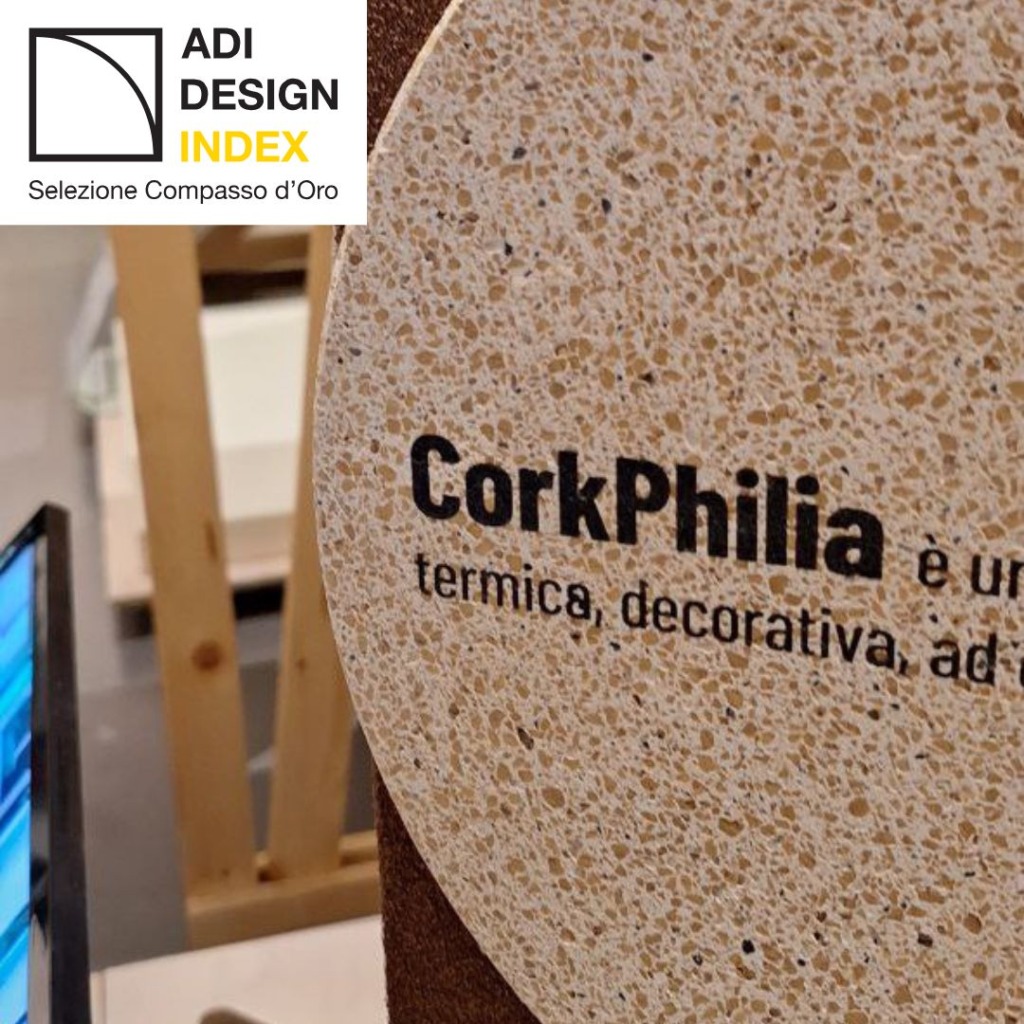
Diego Mingarelli introduced the concept of CorkPhilia, the biophilic challenge launched by Diasen, in which the empathic relationship between people and nature is mediated by the cork-based materials designed and produced by the company. “Thanks in part to the discovery of biophilic architecture, we understood that materials have a deep correlation with the wellbeing of spaces. Having centred our idea of architecture on cork, we adopted CorkPhilia as the element that characterises us, that lets people experience the sensory emotion of contact with nature, creating real wellbeing,” said Diego Mingarelli, CEO of Diasen. “Putting cork at the centre of architecture takes up and updates the wisdom of Mediterranean Building because it is a renewable material, with thermal, dehumidifying and acoustic properties, that sustains an unrepeatable habitat and helps protect and maintain a delicate ecosystem“.
The talks were followed by a round table on Forms of Beauty: Empathy and the Materials of Mediterranean Architecture, in which, besides the three speakers, Professor Ingrid Maria Paoletti also took part. She teaches Architectural Technology at the Department of Architecture, Built Environment and Construction Engineering (ABC) of the Politecnico di Milano and is an expert in materials, with a particular focus on technical innovation in architectural design and on the use of new technologies and computer tools to combine conception and construction.
The correlation between wellbeing and nature seems to be the way to reinterpret a tradition of the past in a modern key. The Mediterranean basin can aspire to regain centrality as a space and a metaphor for comfortable and sustainable building. It is a model of knowledge, cultures and millennia of experience capable of holding together and fusing tradition and modernity, thanks to a history of human settlement, architectural civilisation and effective responses to the great environmental challenges of a climate area subject to changes that will alter the way of life of millions of people.